
Care AI agents are autonomous systems that make decisions and take actions independently. Built on "Agentic AI," they combine new forms of artificial intelligence like large language models (LLMs), traditional AI such as machine learning, and enterprise automation to create autonomous Care AI Agents. Unlike traditional chatbots, Care AI agents analyze data, set goals, and adapt in real time.
On our platform, these agents act as "Virtual Employees" with core capabilities similar to human agents:
- They can be assigned issues directly.
- Their performance is tracked through standard analytics.
- They integrate with existing automations.
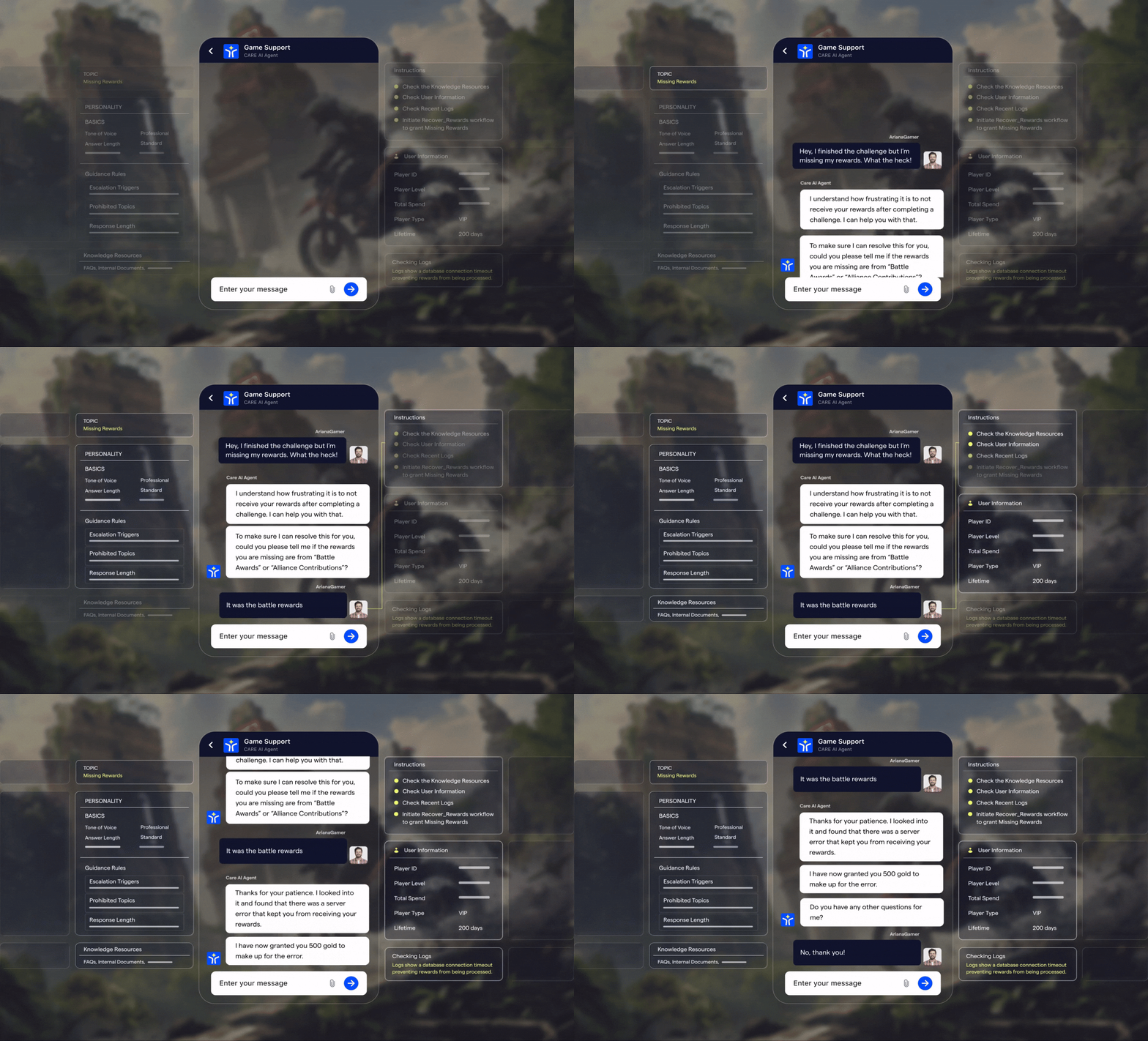
Why use Care AI agents?
Care AI Agents deliver three main benefits:
- Hyper-personalization: Care AI agents analyze user data to deliver relevant, context-aware solutions for each inquiry, enhancing customer experience.
- 24/7 Assistance: Care AI agents provide immediate, round-the-clock support, eliminating wait times and ensuring instant help.
- Operational Efficiency: Care AI agents scale instantly to handle ticket spikes without extra staffing or delays.
Key Capabilities
Care AI Agents manage the full support lifecycle, letting human teams focus on complex, high-value tasks.
- Contextual engagement: Care AI Agents run end-to-end conversations using user context and personalized greetings.
- Intent recognition: They identify user intent and trigger the right workflows to resolve issues.
- Action execution: They fetch information and perform actions on both Helpshift and external systems via API integrations.
- Escalation: They escalate issues to human agents as needed based on configured rules.
- Resolution & Feedback: They collect user feedback and close conversations (resolve or reject issues).
- Human Takeover: Human agents can take over from Care AI agents at any time.
- Human Collaboration: Human agents can provide inputs and hand back issues to Care AI agents.
Components of Care AI Agents
- Personality: Has a distinct personality and voice
- Knowledge: Knows your game, policies, and processes
- Procedures: Follows clear behavioral guidelines
- Guardrails: Always stay within safety boundaries
- Actions: Takes actions to help players
- Topics: Knows how to handle specific situations (Topics)
Related articles
Refer to the articles below to manage and use this feature more effectively:
- Care AI Agent: Overview
- Care AI Agent: How do Care AI Agents differ from Bots
- Care AI Agent: Different Modules of Care AI Agent
- Care AI Agent: Managing Care AI Agents
- Care AI Agent: Knowledge
- Care AI Agent: Procedures
- Care AI Agent: Best Practices to Manage Procedures
- Care AI Agent: Analytics
- Care AI Agents: Adding Care AI Agents to Workflows
- Care AI Agent: Integrating Care AI Agents with External Systems
- Care AI Agent: Managing Privacy and Security
- Care AI Agent: Data Subject Requests Management
- Care AI Agent: Troubleshooting Care AI Agent Errors